Category one
Conventional Systems
The most widely used septic designs · tried, tested, and well suited to most residential properties.
Septic Tank
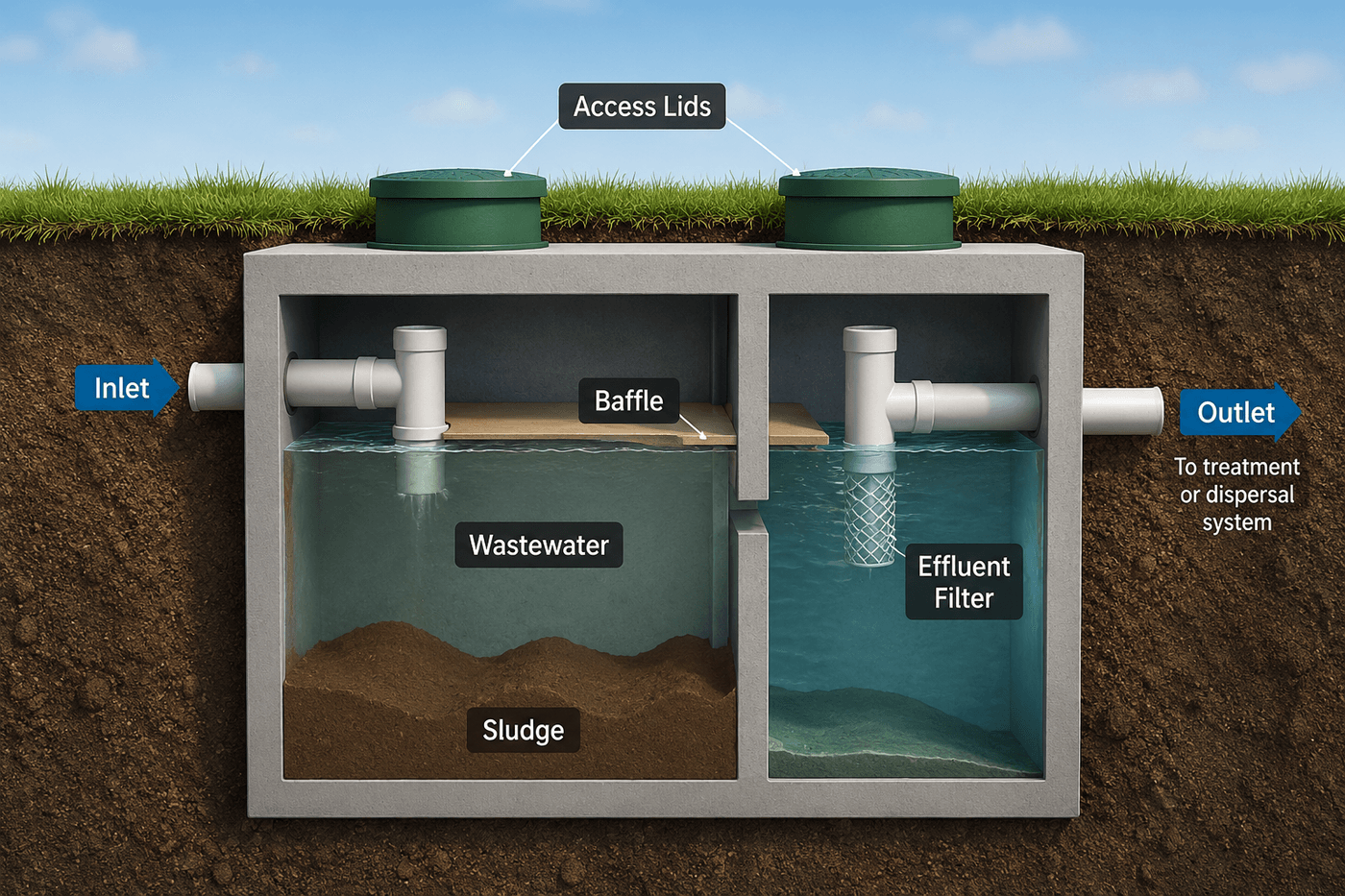
A septic tank is a buried, watertight tank designed and constructed to receive and partially treat raw domestic sanitary wastewater. Heavy solids settle to the bottom of the tank while greases and lighter solids float to the top. The solids stay in the tank while the wastewater is discharged to the drainfield for further treatment and dispersal.
Conventional System
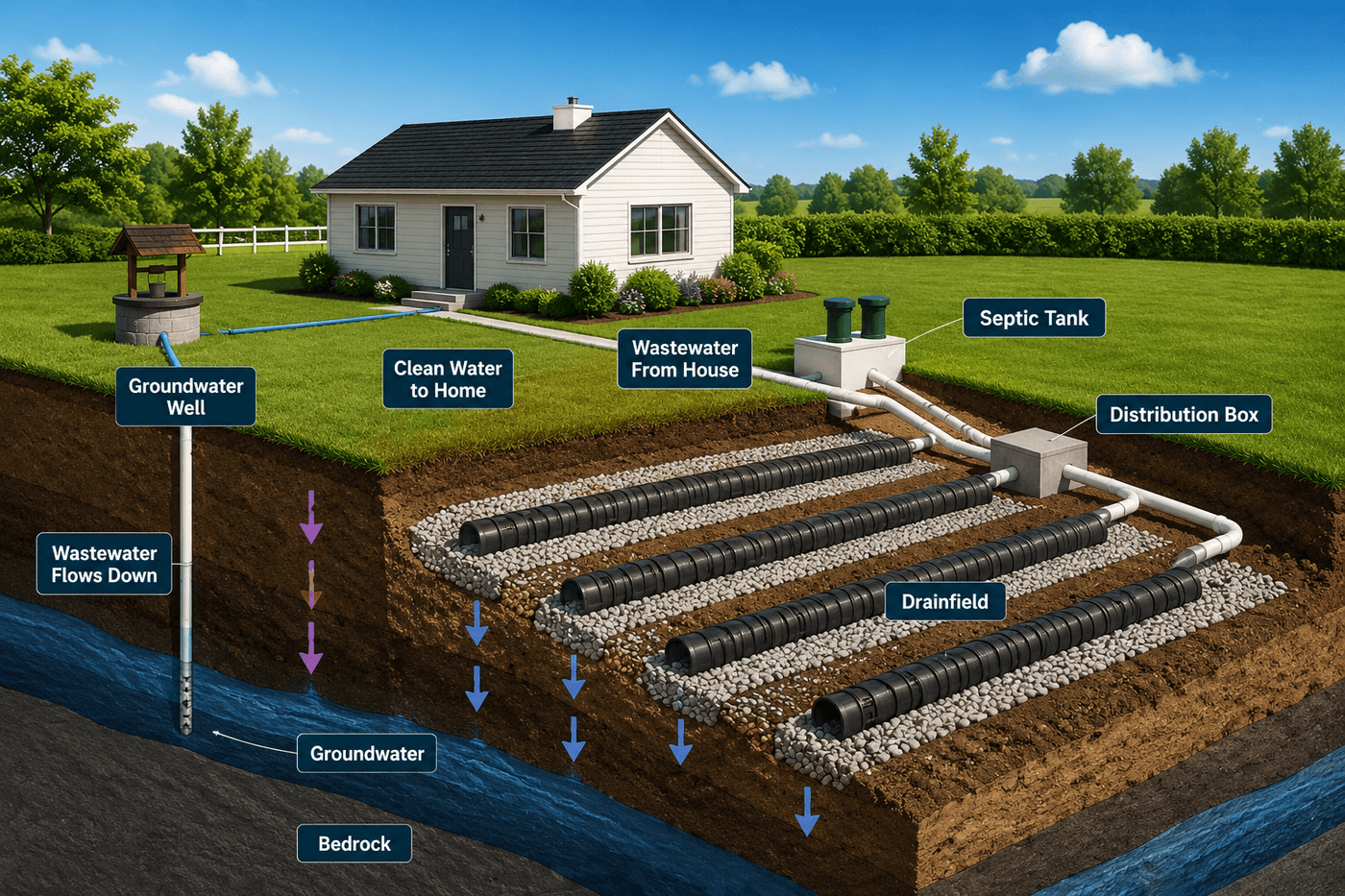
A conventional decentralized wastewater treatment system consists of a septic tank and a trench or bed subsurface wastewater infiltration system, known as a drainfield. A conventional septic system is typically installed at a single-family home or small business.
The gravel/stone drainfield is a design that has existed for decades. The effluent is piped from the septic tank to a shallow underground trench of stone or gravel. A geofabric or similar material is then placed on top of the trench so sand, dirt, and other contaminants do not enter the clean stone. Effluent filters through the stone and is then further treated by microbes once it reaches the soil below the gravel/stone trench.
Gravel/stone systems are relatively large in overall footprint and may not be suitable for all residential sites or conditions.
Chamber System
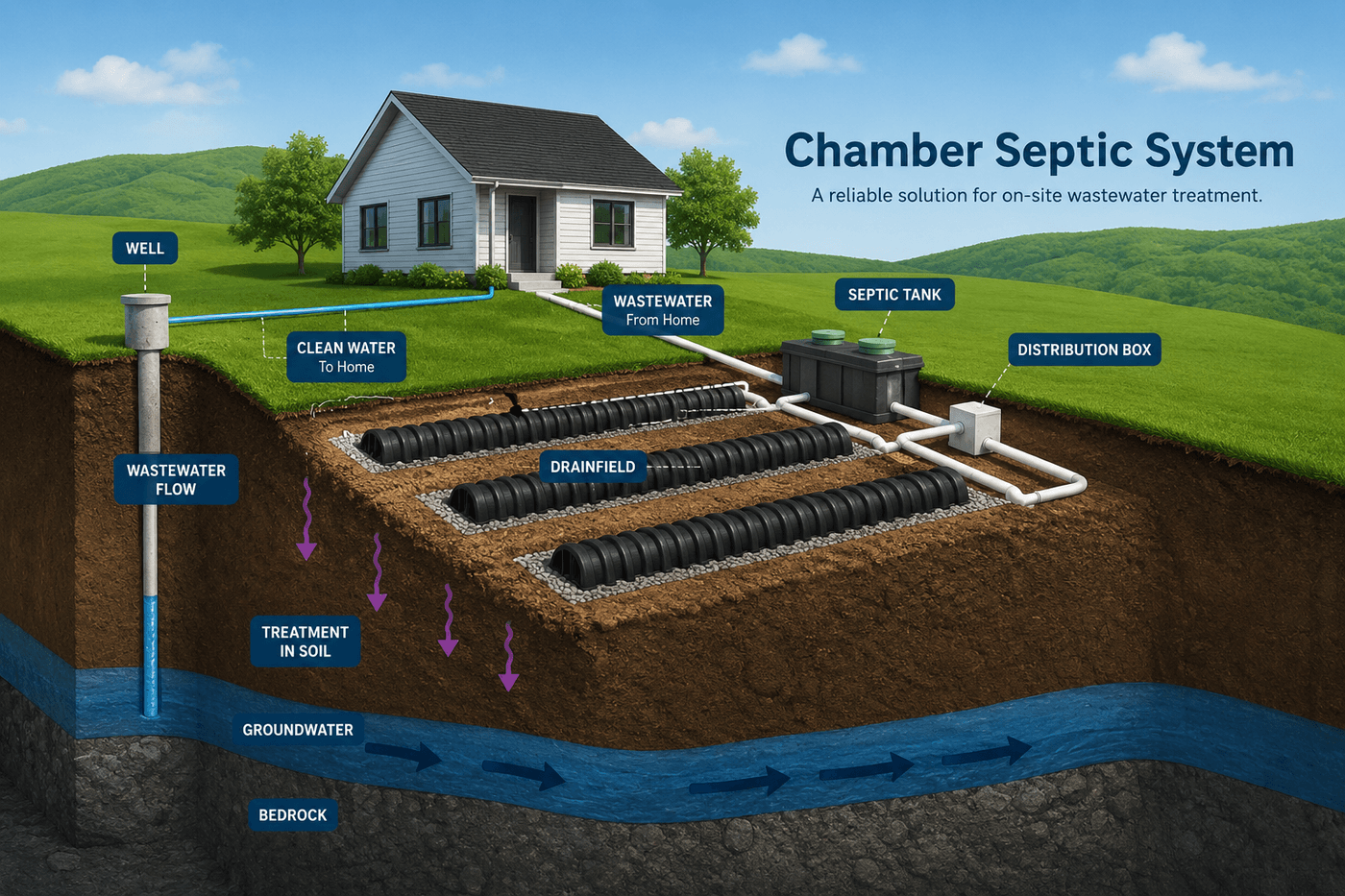
Gravelless drainfields have been widely used for over 30 years in many states and have become a conventional technology replacing gravel systems. They take many forms, including open-bottom chambers, fabric-wrapped pipe, and synthetic materials such as expanded polystyrene media. The gravelless systems can be manufactured with recycled materials and offer a significant savings in carbon footprint.
The chamber system serves as an alternative design to the gravel/stone system. The primary advantage of the chamber system is increased ease of delivery and construction. They are also well suited to areas with high groundwater tables, where the volume of influent to the septic system is variable (e.g., at a vacation home or seasonal inn), in an area where gravel is scarce, or in areas where other technologies such as plastic chambers are readily available.
This type of system consists of a series of connected chambers. The area around and above the chambers is filled with soil. Pipes carry wastewater from the septic tank to the chambers. Inside the chambers, the wastewater comes into contact with the soil. Microbes on or near the soil treat the effluent.
Category two
Alternative Systems
Designed for properties with challenging soil, high water tables, limited space, or sensitive environments. Often more involved to install but built for specific conditions.
Drip Distribution System
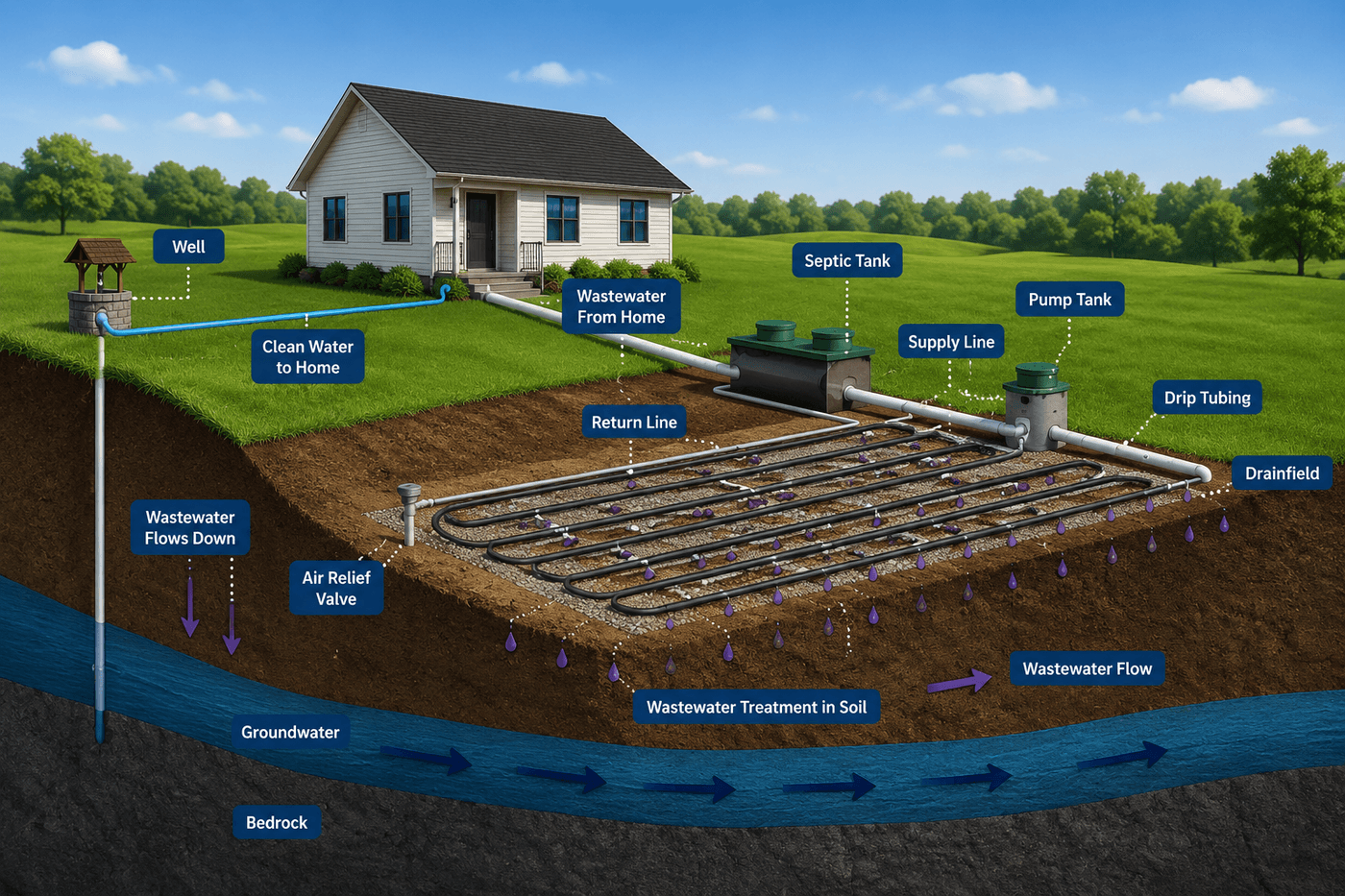
The drip distribution system is a type of effluent dispersal that can be used in many types of drainfields. The main advantage of the drip distribution system is that no large mound of soil is needed as the drip laterals are inserted into the top 6 to 12 inches of soil.
The disadvantage of the drip distribution system is that it requires a large dose tank after the septic tank to accommodate the timed dose delivery of wastewater to the drip absorption area. Additional components, such as electrical power, are necessary for this system, requiring an added expense and increased maintenance.
Aerobic Treatment Unit (ATU)
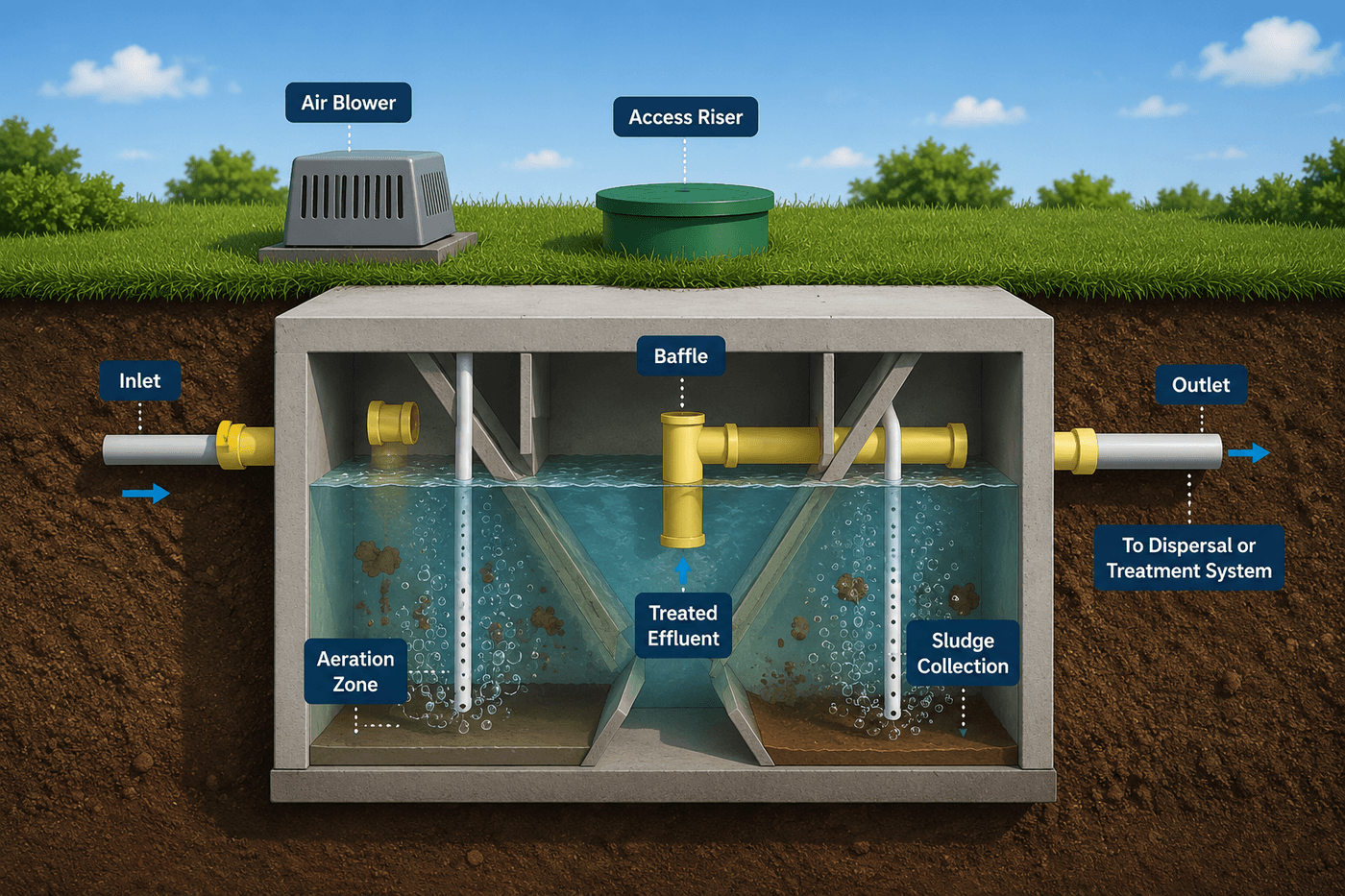
Aerobic Treatment Units (ATUs) use many of the same processes as a municipal sewage plant, but on a smaller scale. An aerobic system injects oxygen into the treatment tank. The additional oxygen increases natural bacterial activity within the system that then provides additional treatment for nutrients in the effluent. Some aerobic systems may also have a pretreatment tank and a final treatment tank including disinfection to further reduce pathogen levels.
The benefits of this system are that it can be used in homes with smaller lots, inadequate soil conditions, in areas where the water table is too high, or for homes close to a surface water body sensitive to contamination by nutrients contained in wastewater effluent. Regular lifetime maintenance should be expected for ATUs.
Mound Systems
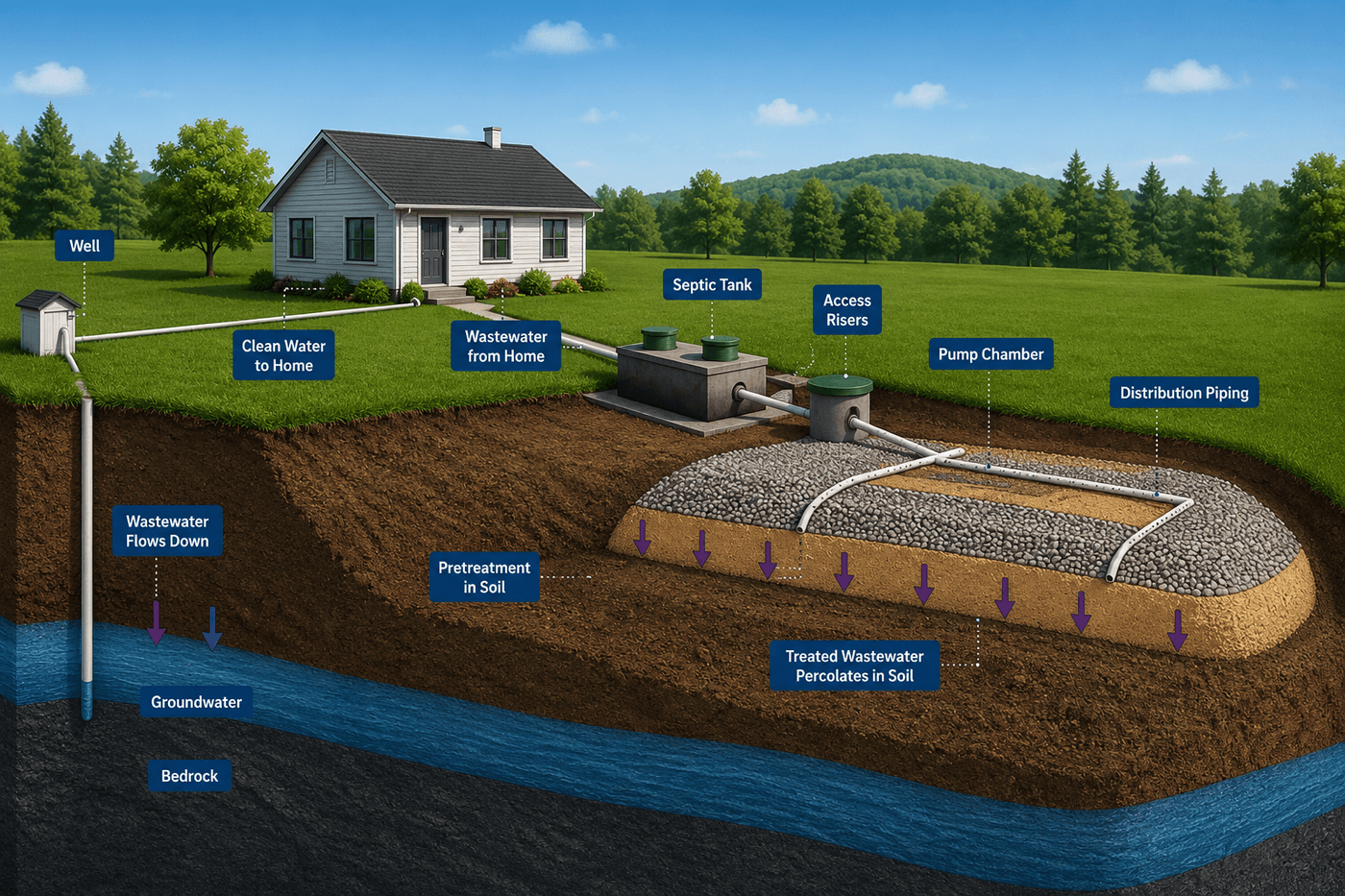
Mound systems are an option in areas of shallow soil depth, high groundwater, or shallow bedrock. The constructed sand mound contains a drainfield trench. Effluent from the septic tank flows to a pump chamber where it is pumped to the mound in prescribed doses. Treatment of the effluent occurs as it discharges to the trench and filters through the sand, and then disperses into the native soil.
While mound systems can be a good solution for certain soil conditions, they require a substantial amount of space and periodic maintenance.
Recirculating Sand Filter System
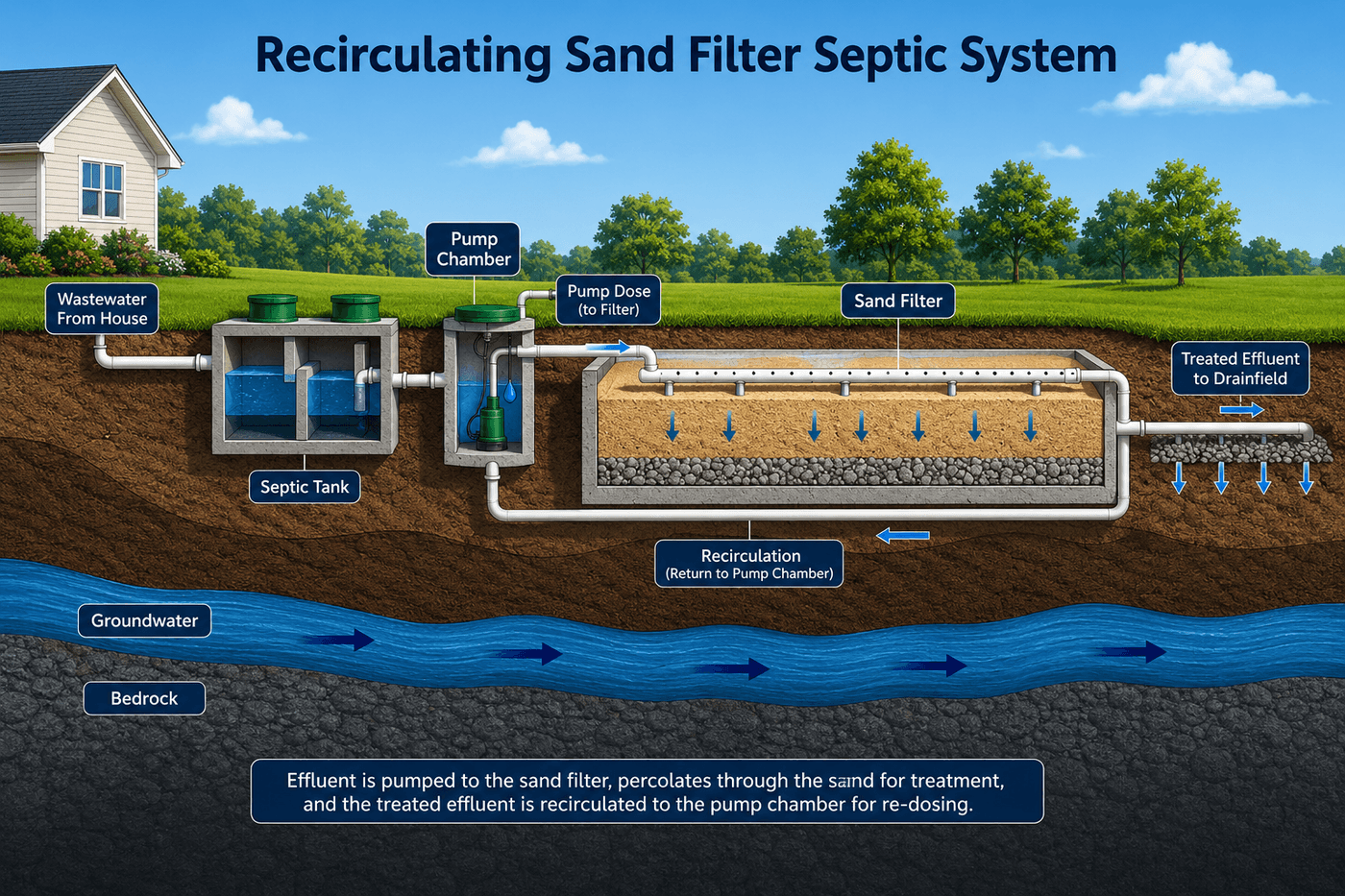
Sand filter systems can be constructed above or below ground. Effluent flows from the septic tank to a pump chamber. It is then pumped to the sand filter. The sand filter is often PVC-lined or a concrete box filled with a sand material. Effluent is pumped under low pressure through the pipes at the top of the filter. The effluent leaves the pipes and is treated as it filters through the sand. The treated wastewater is then discharged to the drainfield.
Sand filters provide a high level of treatment for nutrients and are good for sites with high water tables or that are close to water bodies, but they are more expensive than a conventional septic system.
Evapotranspiration System
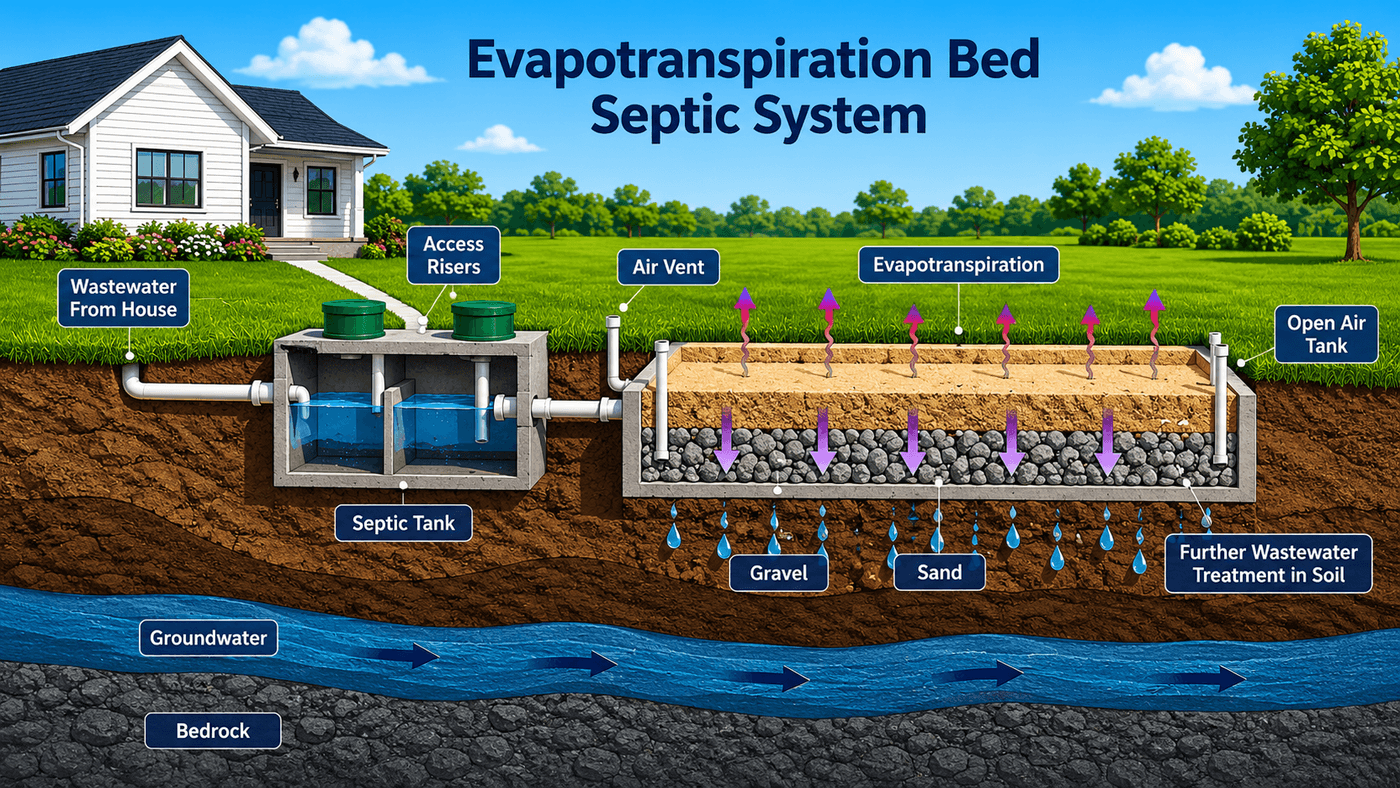
Evapotranspiration systems have unique drainfields. The base of the evapotranspiration system drainfield is lined with a watertight material. After the effluent enters the drainfield, it evaporates into the air. Unlike other septic system designs, the effluent never filters to the soil and never reaches groundwater.
Evapotranspiration systems are only useful in specific environmental conditions. The climate must be arid and have adequate heat and sunlight. These systems work well in shallow soil; however, they are at risk of failure if it rains or snows too much.
Constructed Wetland System
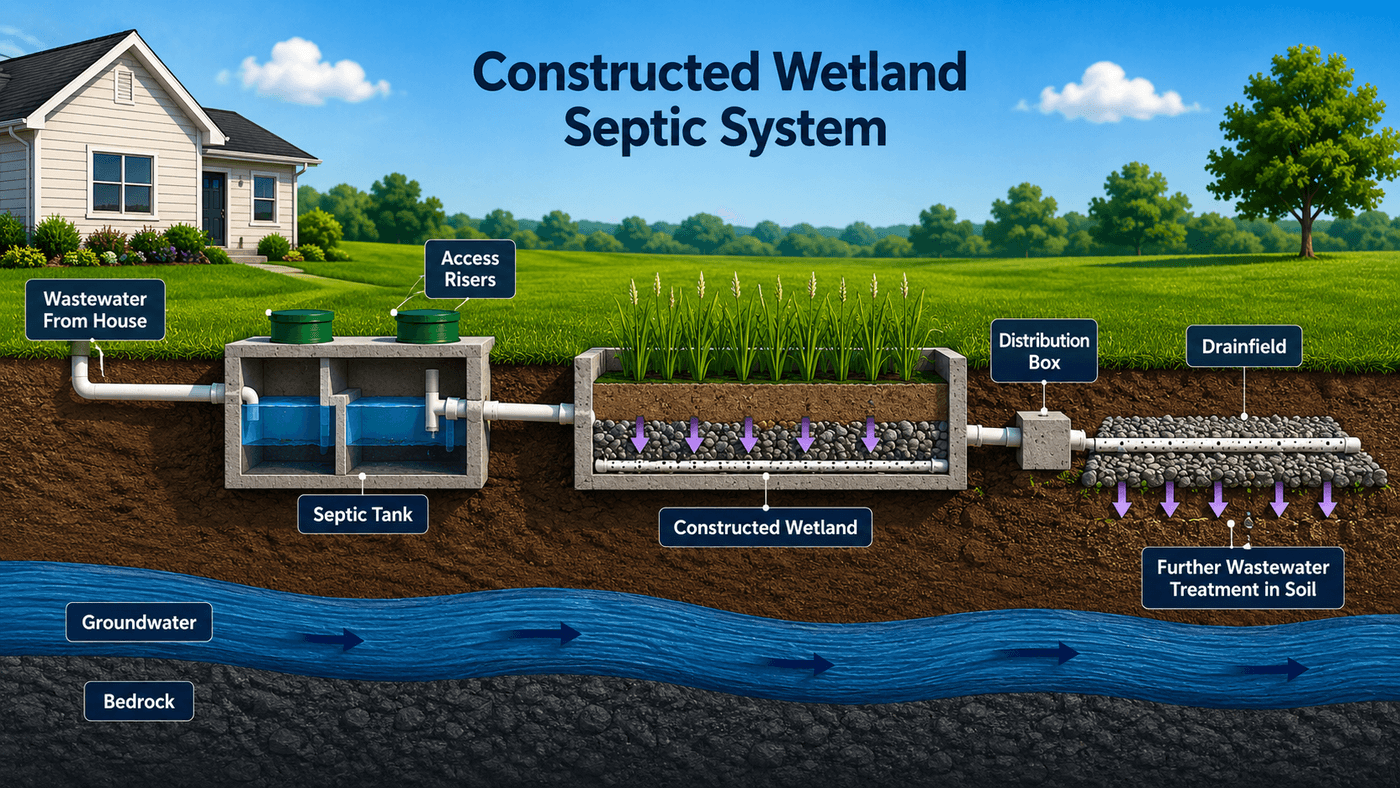
A constructed wetland mimics the treatment processes that occur in natural wetlands. Wastewater flows from the septic tank and enters the wetland cell. The wastewater then passes through the media and is treated by microbes, plants, and other media that remove pathogens and nutrients. The wetland cell typically consists of an impermeable liner, gravel and sand fill, along with the appropriate wetland plants, which must be able to survive in a perpetually saturated environment.
A wetland system can work via either gravity flow or pressure distribution. As wastewater flows through the wetland, it may exit the wetland and flow into a drainfield for further wastewater treatment into the soil.
Cluster / Community System
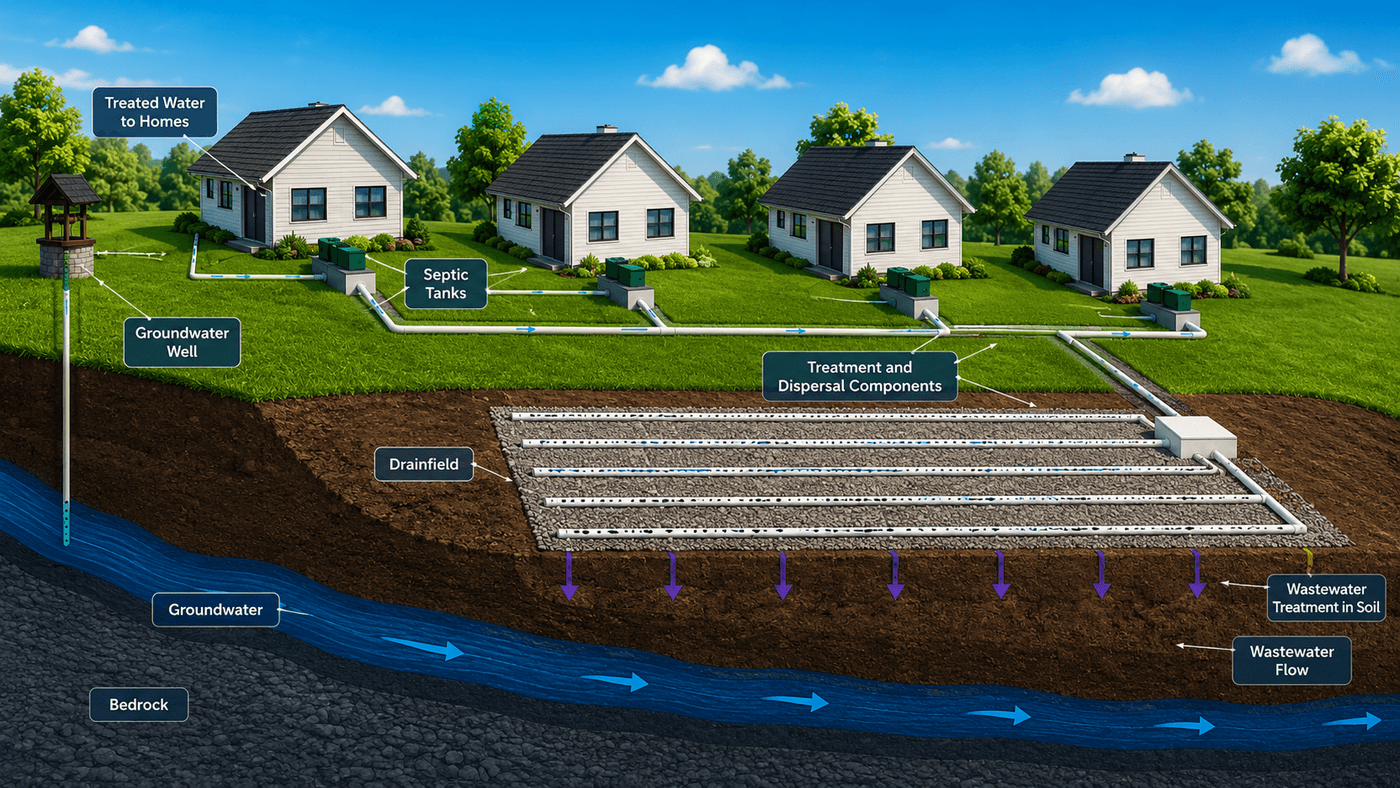
A cluster (or community) decentralized wastewater treatment system is under some form of common ownership and collects wastewater from two or more dwellings or buildings. It conveys the wastewater to a treatment and dispersal system located on a suitable site near the dwellings or buildings. It is common to find cluster systems in places like rural subdivisions.
Community-Scale Options
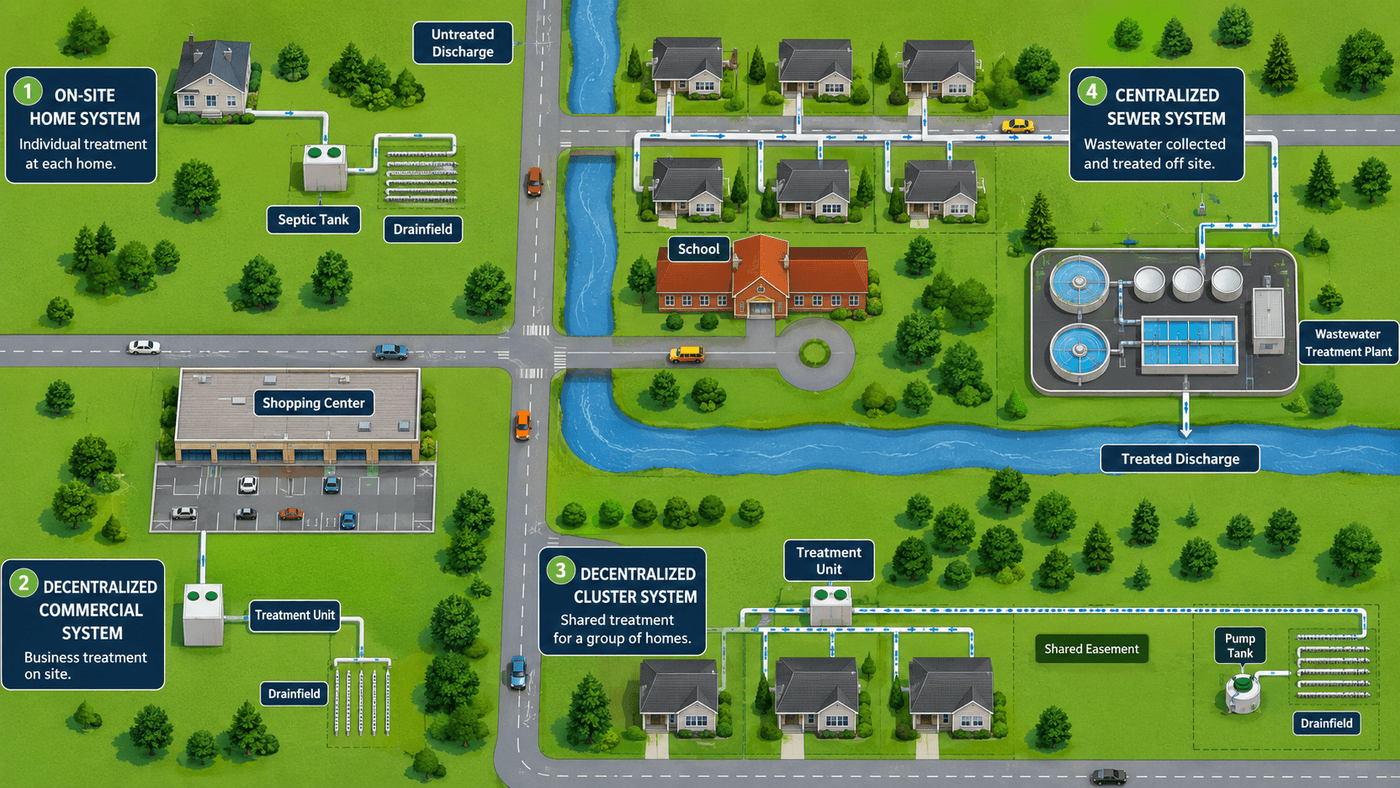
Within a region, county, city, town, or neighborhood, the systems used to treat wastewater can vary significantly and may include both centralized and decentralized treatment options. The most appropriate system is selected based on factors such as cost, land availability, population density, and environmental conditions.
For example, several types of decentralized systems can coexist in a single town: a conventional septic system with a drainfield serving a single home, an onsite cluster system serving a commercial shopping center, and an offsite cluster system serving multiple houses and an apartment building.